




DALI vs. 0-10V vs. TRIAC Dimming: Which LED Lighting Control System Is Best for Your Project?
Introduction
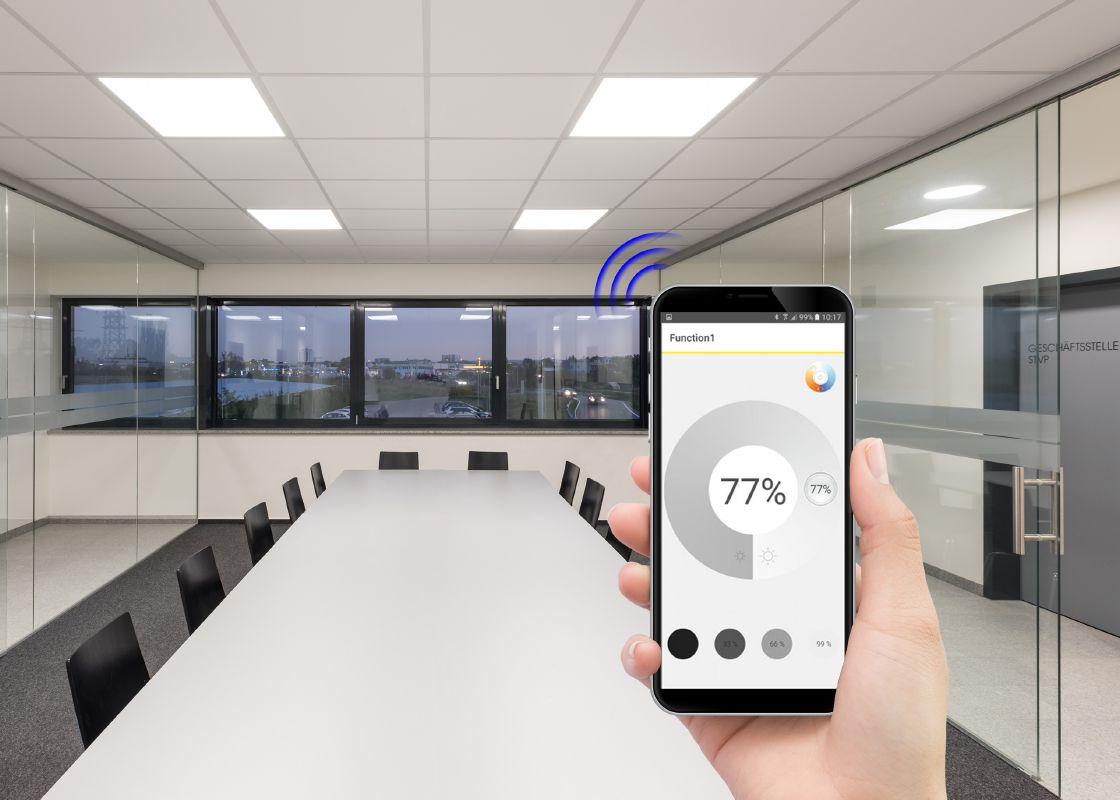
Dimming is an important feature in modern commercial LED lighting systems. It allows users to adjust brightness according to different activities, create comfortable lighting environments, reduce unnecessary energy consumption, and improve overall lighting flexibility.
For commercial lighting projects, choosing the right dimming technology is just as important as selecting the LED fixture itself. Different control systems offer different levels of precision, compatibility, installation complexity, and cost.
Among the most widely used options are DALI, 0-10V, AND TRIAC DIMMING. Each technology has its own operating principle and is suitable for different applications. For example, DALI is commonly used in intelligent building lighting systems, 0-10V is popular in commercial and industrial installations, while TRIAC dimming is often selected for projects using traditional phase-cut wall dimmers.
So, which dimming solution is best for your project?
In this guide, we will explain how these three technologies work, compare their advantages and disadvantages, and provide practical advice on selecting the right dimmable LED drivers for your commercial lighting requirements.
1. What Are DALI, 0-10V, and TRIAC Dimming?
Before comparing their performance, it is important to understand the basic differences between these three dimming technologies.
1.1 What Is DALI Dimming?
DALI (DIGITAL ADDRESSABLE LIGHTING INTERFACE) is a digital lighting control protocol standardized under the IEC 62386 series. It is designed for intelligent lighting management in commercial buildings, offices, hotels, and other large-scale installations.
Unlike traditional analog dimming systems, DALI uses digital communication between control devices and compatible LED drivers.
Each compatible driver can have an individual address, allowing a lighting control system to manage specific fixtures, groups, or lighting scenes.
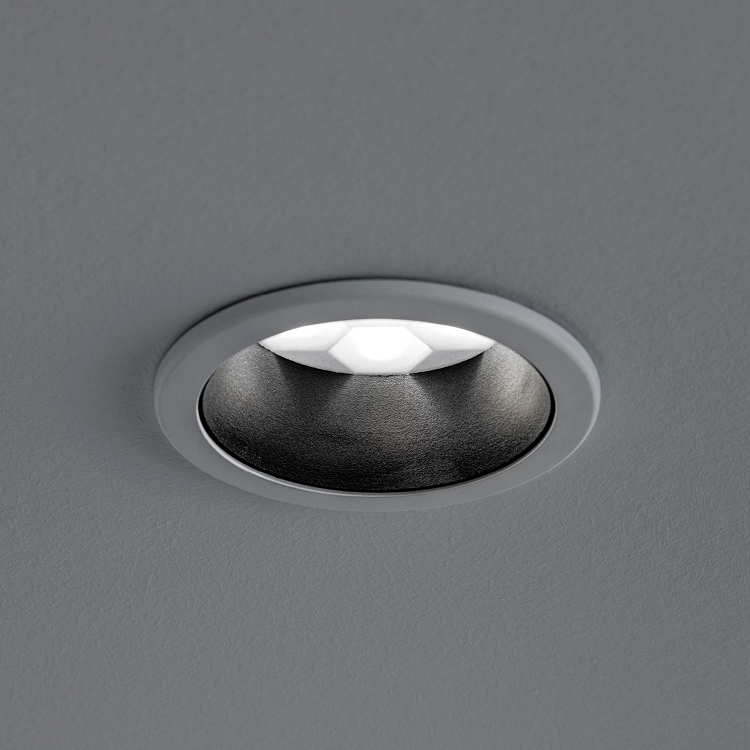
A DALI DIMMABLE LED DOWNLIGHT can therefore be integrated into a centralized lighting management system, making it easier to adjust brightness across different rooms and areas.
1.2 What Is 0-10V Dimming?
0-10V DIMMING is an analog lighting control method that adjusts LED brightness through a low-voltage control signal.
The control device sends a voltage signal, generally between 0V and 10V, to a compatible LED driver. The driver interprets this signal and adjusts the output current supplied to the LED module.
In many common 0-10V systems, a higher control voltage corresponds to higher light output, while a lower voltage reduces brightness. The exact dimming behavior and minimum output depend on the driver and control equipment.
0-10V DIMMABLE LED LIGHTING is widely used in offices, warehouses, commercial buildings, and industrial environments because the technology is relatively simple and easy to integrate into many lighting control systems.
It is important to distinguish 0-10V from 1-10V systems. Although they are related analog control methods, their electrical behavior and control compatibility may differ.
1.3 What Is TRIAC Dimming?
TRIAC DIMMING is a phase-cut dimming technology commonly used with AC-powered lighting circuits.
TRIAC stands for Triode for Alternating Current. It controls the amount of electrical power delivered to a lighting load by switching the AC waveform on and off at specific points during each cycle.
There are two common phase-cut methods:
-
Leading-edge dimming: The dimmer cuts the beginning portion of each AC waveform cycle.
-
Trailing-edge dimming: The dimmer cuts the ending portion of each AC waveform cycle.
TRIAC-compatible LED drivers are designed to work with specific phase-cut dimmers.
TRIAC DIMMABLE LED LIGHTS are often suitable for renovation projects and smaller commercial installations where existing wall dimmers or phase-cut control systems are already installed.
However, not every LED driver is compatible with every TRIAC dimmer. Compatibility testing is essential to avoid flickering, buzzing, or unstable dimming.
2. How Do the Three Dimming Technologies Work?
Although all three technologies control LED brightness, their communication methods and electrical principles are different.
2.1 How DALI Dimming Works
DALI uses a dedicated two-wire digital communication bus to transmit control commands between the controller and compatible lighting devices.
A typical DALI system includes:
-
DALI controller
-
DALI-compatible LED drivers
-
Two-wire communication bus
-
Power supply for the DALI bus, where required
-
Sensors and other compatible control devices
When a user changes the lighting level through a control panel or building management system, the controller sends a digital command to the selected driver.
The driver then adjusts its LED output according to the received instruction.
One of the biggest advantages of DALI is individual addressing. Each compatible device can be assigned an address, allowing flexible grouping, scene control, and centralized management.
Depending on the system configuration and device capabilities, DALI can also support status feedback, diagnostics, and other advanced lighting management functions.
2.2 How 0-10V Dimming Works
A 0-10V system generally uses two additional low-voltage control wires connected between the dimming controller and the LED driver.
The controller generates an analog voltage signal, and the driver adjusts the LED output based on that signal.
For example, a control signal near 10V may represent full brightness, while a lower voltage represents a reduced light level.
The actual relationship between signal voltage and light output depends on the driver's specifications. Some drivers also have a defined minimum dimming level and may switch off only through a separate control method.
Compared with DALI, 0-10V is relatively straightforward. However, conventional 0-10V systems generally do not provide individual digital addressing or two-way communication.
2.3 How TRIAC Dimming Works
TRIAC dimming controls the AC power waveform supplied to the LED driver.
When the user turns the dimmer knob or adjusts a compatible wall control, the dimmer changes the phase angle at which current is delivered during each AC cycle.
The LED driver must be specifically designed to interpret this modified waveform and maintain stable LED operation.
The compatibility between the dimmer and driver is particularly important. Differences in electrical load, dimmer design, and driver circuitry can affect the minimum dimming level, smoothness, and overall performance.
3. DALI vs. 0-10V vs. TRIAC: Advantages and Disadvantages
Each dimming technology has different strengths. The right choice depends on project scale, control requirements, installation conditions, and budget.
3.1 DALI Dimming: Advantages and Disadvantages
Advantages
-
INDIVIDUAL FIXTURE CONTROL: Compatible drivers can be individually addressed and controlled.
-
FLEXIBLE LIGHTING SCENES: Different brightness levels can be programmed for meeting rooms, offices, hotels, and retail spaces.
-
CENTRALIZED MANAGEMENT: Multiple lighting zones can be controlled through a central system.
-
SCALABLE CONTROL: Suitable for complex commercial installations that require flexible lighting management.
-
ADVANCED SYSTEM FEATURES: Supported devices can provide status information and diagnostic functions.
Disadvantages
-
Higher initial system cost compared with simpler analog control solutions.
-
Requires compatible DALI controllers, drivers, and system configuration.
-
Installation and commissioning may require professional technical support.
-
Not every DALI device supports the same functions, so compatibility and protocol versions should be checked.
Best For: Large offices, hotels, shopping malls, smart buildings, and commercial projects requiring centralized lighting control.
3.2 0-10V Dimming: Advantages and Disadvantages
Advantages
-
SIMPLE CONTROL STRUCTURE: Easy to understand and integrate into many commercial lighting systems.
-
COST-EFFECTIVE: Often offers a good balance between functionality and installation cost.
-
WIDE APPLICATION: Commonly used in offices, warehouses, factories, and commercial buildings.
-
SMOOTH DIMMING: Compatible systems can provide gradual brightness adjustment.
-
EASY ZONE CONTROL: Multiple fixtures can be connected to the same control channel, subject to controller and driver capacity.
Disadvantages
-
Conventional systems generally do not support individual digital addressing.
-
Additional control wiring is usually required.
-
Control signal wiring and driver specifications must be compatible.
-
Minimum dimming levels and switch-off behavior vary between products.
-
It does not normally provide the same level of digital feedback as DALI.
Best For: Offices, warehouses, schools, factories, and commercial spaces that need reliable brightness adjustment without complex digital control.
3.3 TRIAC Dimming: Advantages and Disadvantages
Advantages
-
SUITABLE FOR EXISTING AC DIMMER SYSTEMS: Can work with compatible phase-cut wall dimmers.
-
LOWER INSTALLATION COMPLEXITY: Often convenient for smaller projects and renovation applications.
-
FAMILIAR CONTROL EXPERIENCE: Users can adjust brightness using traditional wall dimmers.
-
PRACTICAL FOR SMALLER INSTALLATIONS: Suitable for selected residential and light commercial applications.
Disadvantages
-
Compatibility between LED drivers and dimmers must be carefully checked.
-
Some combinations may cause flickering, buzzing, or unstable operation.
-
Dimming performance may vary depending on the electrical load.
-
Limited flexibility compared with digital lighting control systems.
-
It is not generally the first choice for large, individually addressable lighting networks.
Best For: Renovation projects, small retail spaces, restaurants, and commercial installations using compatible phase-cut dimmers.
4. Which Dimming Technology Is Best for Different Commercial Projects?
There is no single dimming solution that works best for every project. Buyers should select a control method based on the building's function, lighting design, and long-term operating requirements.
4.1 Office Lighting Projects
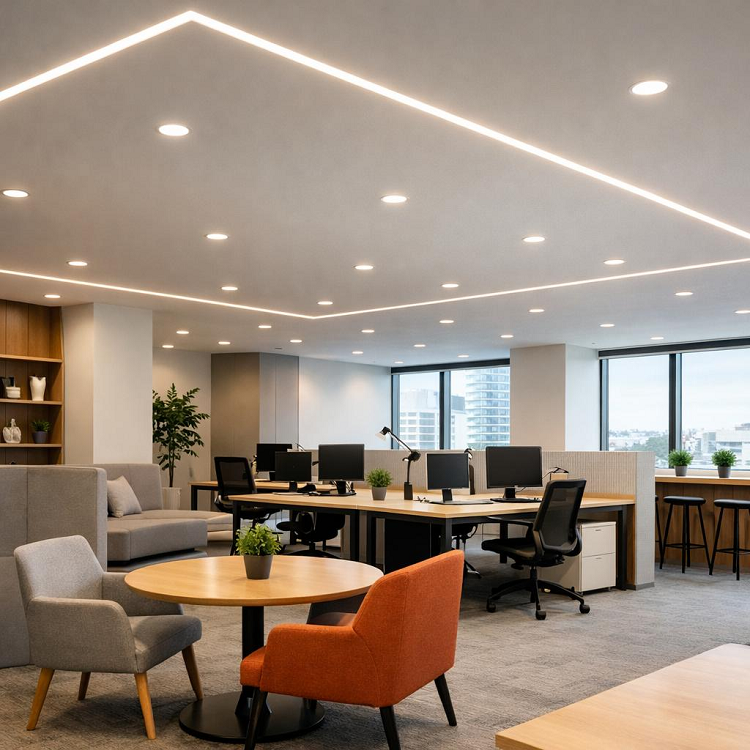
Offices need flexible lighting to support different activities, including meetings, computer work, presentations, and collaborative tasks.
DALI IS AN EXCELLENT CHOICE FOR LARGE OFFICE PROJECTS because it supports individually addressed fixtures, lighting groups, and programmable scenes.
For smaller offices with simpler requirements, 0-10V dimming can provide reliable brightness adjustment at a more manageable system cost.
4.2 Hotel and Hospitality Lighting
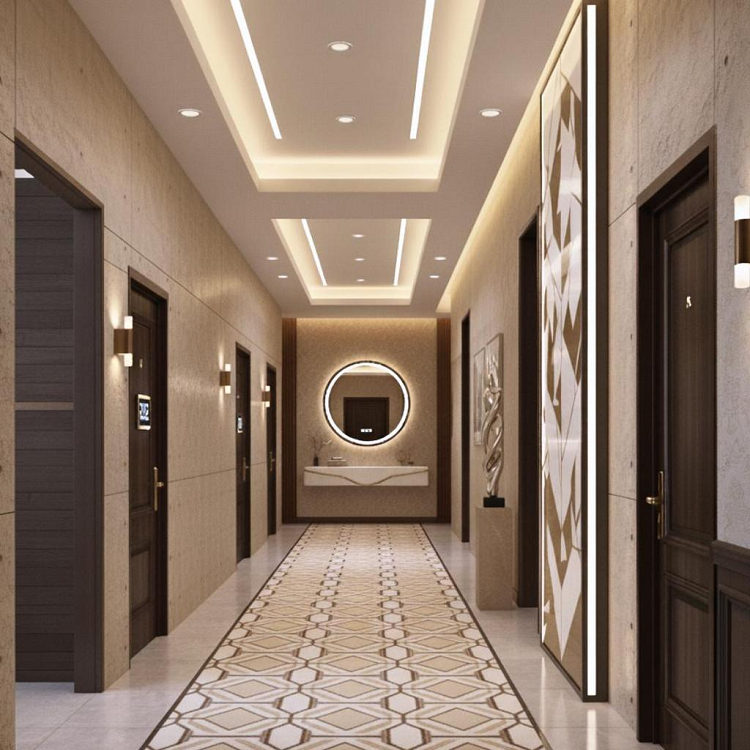
Hotels require different lighting environments for guest rooms, corridors, restaurants, reception areas, and conference rooms.
DALI is particularly suitable for projects that need centralized management and multiple lighting scenes.
For smaller renovation projects, TRIAC dimmable LED downlights may also be considered when compatible phase-cut dimmers are already part of the electrical installation.
4.3 Retail Store Lighting
Retail lighting must highlight merchandise while creating a comfortable shopping environment.
For larger stores with multiple lighting zones, DALI provides flexible control of different fixture groups and scenes.
0-10V can be a practical alternative for stores that need straightforward brightness adjustment.
For track lights, spotlights, and downlights, buyers should also evaluate beam angle, color rendering, and dimming performance rather than choosing a control system based on the dimming protocol alone.
4.4 Warehouse and Industrial Lighting
Warehouses and industrial buildings often require lighting control across large areas.
0-10V DIMMABLE LED LIGHTING is a practical option for many projects because of its relatively simple control structure and suitability for zone-based brightness adjustment.
DALI may be more appropriate when the building requires advanced scheduling, individual control, or integration with a broader building management system.
4.5 Residential-Style Commercial Renovation Projects
Some restaurants, small shops, and older commercial buildings already have phase-cut dimmers installed.
In these cases, TRIAC dimmable LED fixtures can reduce the need to replace the entire control infrastructure, provided the selected LED drivers are compatible with the existing dimmers.
5. How Should Buyers Choose the Right Dimmable LED Driver?
Selecting the correct LED driver is one of the most important steps when purchasing dimmable commercial LED lighting.
Even a high-quality LED fixture may perform poorly if its driver is not matched to the control system.
Here are six important factors buyers should consider.
5.1 Confirm the Dimming Protocol
First, identify the control method required by the project.
Ask the electrical contractor or lighting designer whether the installation requires:
-
DALI or DALI-2 compatible drivers
-
0-10V analog dimming
-
TRIAC phase-cut dimming
-
Another specified control protocol
Each driver must be designed and tested for its intended control system.
5.2 Check Driver Input and Output Specifications
Buyers should confirm the following electrical parameters:
-
Input voltage and frequency
-
Rated output power
-
Output current
-
Output voltage range
-
Power factor
-
Operating temperature
-
Protection features
The driver must match the electrical requirements of the LED module and the local power supply.
5.3 Evaluate Dimming Range and Minimum Brightness
A driver advertised as dimmable does not necessarily provide smooth dimming down to 1% or complete switch-off.
Ask the manufacturer to confirm:
-
Minimum dimming percentage
-
Dimming curve
-
Whether the light can turn off through the control system
-
Whether flicker occurs at low brightness
-
Whether the dimming performance is consistent across the operating range
These details are particularly important for hotels, restaurants, and other environments where low-level lighting is frequently used.
5.4 Check Flicker and Noise Performance
Flickering can reduce visual comfort and may become more noticeable at lower brightness levels.
For professional projects, buyers should request relevant flicker test data and confirm that the driver performs consistently with the intended dimmer or controller.
For TRIAC systems, also check for audible buzzing and compatibility with the specified phase-cut dimmer.
5.5 Confirm Compatibility With the Complete Lighting System
The LED driver should be evaluated together with the LED module, dimmer, controller, wiring, and other connected devices.
For DALI systems, verify device compatibility and the required protocol functions.
For 0-10V systems, confirm the control interface and wiring requirements.
For TRIAC systems, test the actual dimmer and driver combination under the expected electrical load.
5.6 Request Samples and Conduct Project Testing
Before placing a large order, buyers should request samples and test the complete lighting system.
A practical evaluation should include:
-
Full-brightness operation
-
Gradual dimming
-
Minimum brightness
-
Repeated on/off operation
-
Flicker and audible noise
-
Compatibility with the project's control equipment
This process helps reduce installation risks and avoids costly product replacement after delivery.
6. Why Choose a Professional LED Lighting Manufacturer for Dimming Customization?
For lighting brands, distributors, importers, and engineering contractors, selecting a manufacturer with dimming customization capabilities can make product sourcing more efficient.
A professional LED DOWNLIGHT MANUFACTURER should be able to discuss driver selection, dimming compatibility, optical performance, and electrical requirements according to the intended application.
At FITLIGHT LIGHTING, our product range includes LED downlights, LED spotlights, LED track lights, LED linear lights, and magnetic track lighting systems.
We support OEM and ODM cooperation for customers who need lighting products tailored to their market and project requirements.
When discussing a dimmable LED lighting order, buyers can provide their preferred control protocol, input voltage, power requirements, dimming range, and target application.
The manufacturer can then evaluate the appropriate driver configuration and arrange sample testing before mass production.
7. Frequently Asked Questions About LED Dimming
Q1: Which Is Better, DALI or 0-10V Dimming?
DALI is generally more suitable for projects requiring individual fixture addressing, programmable scenes, and centralized lighting management.
0-10V is a practical option for projects that need straightforward analog brightness control with a simpler system structure.
The best choice depends on project requirements and budget.
Q2: Can TRIAC Dimmable LED Lights Work With Any Wall Dimmer?
No. TRIAC dimmable LED lights must be paired with compatible phase-cut dimmers.
Different dimmers may use leading-edge or trailing-edge control and may have different minimum load requirements.
Always check the manufacturer's compatibility recommendations and test the actual combination before installation.
Q3: Can I Convert a Non-Dimmable LED Downlight Into a Dimmable One?
Not simply by adding a dimmer switch.
The LED driver must support the required dimming protocol. A non-dimmable driver generally needs to be replaced with a compatible dimmable driver, and the control equipment must also match.
Q4: Is DALI Suitable for Small Commercial Projects?
Yes. DALI can be used in small projects, but its advanced control functions may not be necessary for installations with only a few fixtures and simple brightness adjustment.
Buyers should compare the total system cost with the actual control requirements.
Q5: What Information Should I Provide When Ordering Dimmable LED Downlights?
Buyers should provide the required dimming protocol, input voltage, wattage, color temperature, dimming range, installation environment, and applicable market requirements.
It is also helpful to provide the dimmer or controller model so the manufacturer can evaluate compatibility.
Conclusion
DALI, 0-10V, and TRIAC are three widely used LED dimming technologies, but they are designed for different control requirements.
DALI IS IDEAL FOR INTELLIGENT COMMERCIAL LIGHTING SYSTEMS, particularly in large offices, hotels, and smart buildings.
0-10V IS A PRACTICAL AND COST-EFFECTIVE SOLUTION for many commercial and industrial installations that need straightforward brightness control.
TRIAC IS A CONVENIENT OPTION FOR COMPATIBLE PHASE-CUT LIGHTING SYSTEMS, especially in smaller projects and renovation applications.
For buyers sourcing dimmable LED downlights, spotlights, track lights, or linear lighting, the most important step is to match the LED driver with the project's control system and test the complete setup before mass production.
Working with an experienced LED lighting manufacturer can help you evaluate driver options, confirm compatibility, and develop a lighting solution that meets your project requirements.