



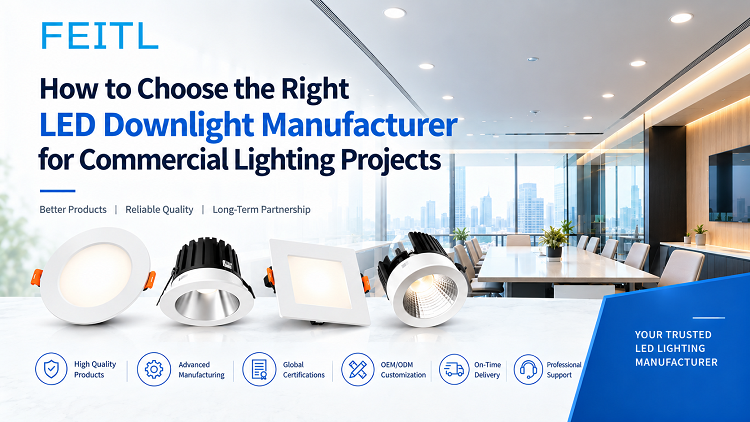
How to Choose the Right LED Downlight Manufacturer for Commercial Lighting Projects
Choosing the right LED DOWNLIGHT MANUFACTURER is an important decision for lighting distributors, wholesalers, contractors, importers, and commercial project developers. The right manufacturing partner can help you maintain consistent product quality, meet project specifications, control purchasing costs, and deliver reliable lighting solutions to your customers.
However, not every supplier offers the same level of manufacturing capability, technical support, customization, or quality control. Two LED DOWNLIGHTS with similar wattage and appearance may differ significantly in light output, glare control, driver performance, thermal management, and long-term reliability.
For B2B buyers, selecting a supplier based solely on the lowest quotation can lead to unexpected costs, product inconsistencies, installation problems, and delays.
So, how do you choose an LED DOWNLIGHT MANUFACTURER that can meet your commercial lighting requirements and support your business over the long term?
In this guide, we will explain the key factors to consider, from product specifications and factory capabilities to certifications, OEM/ODM services, pricing, and after-sales support.
1. Understand Your Commercial Lighting Project Requirements
Before contacting an LED DOWNLIGHT MANUFACTURER, define your project requirements. A clear specification makes it easier to identify suitable products, compare quotations, and avoid misunderstandings during production.
Identify the Application and Installation Environment
Different commercial spaces require different lighting solutions.
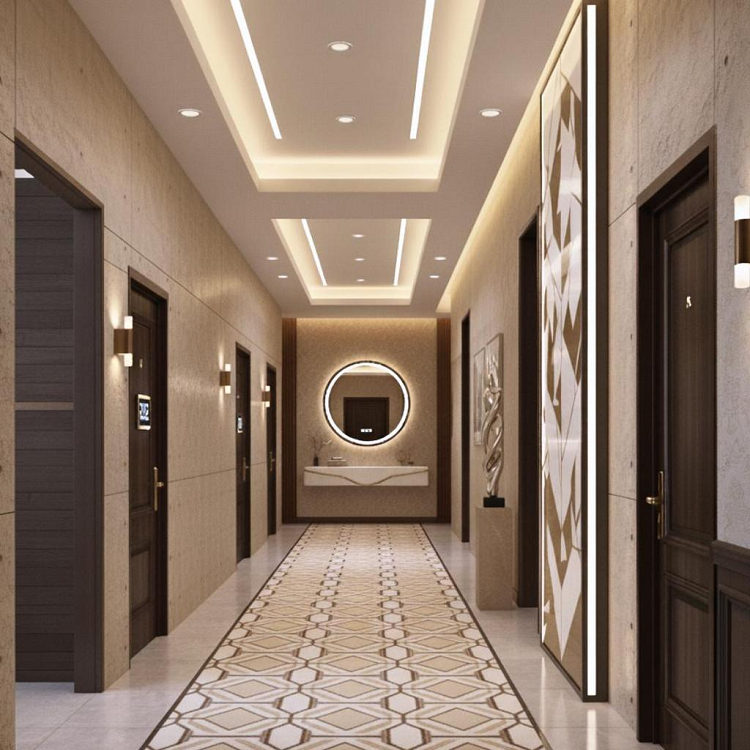
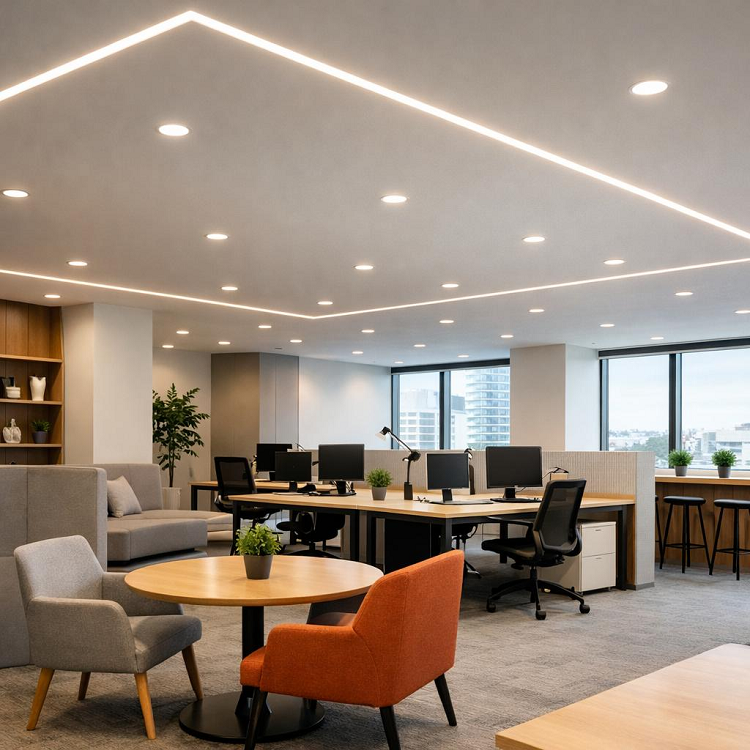
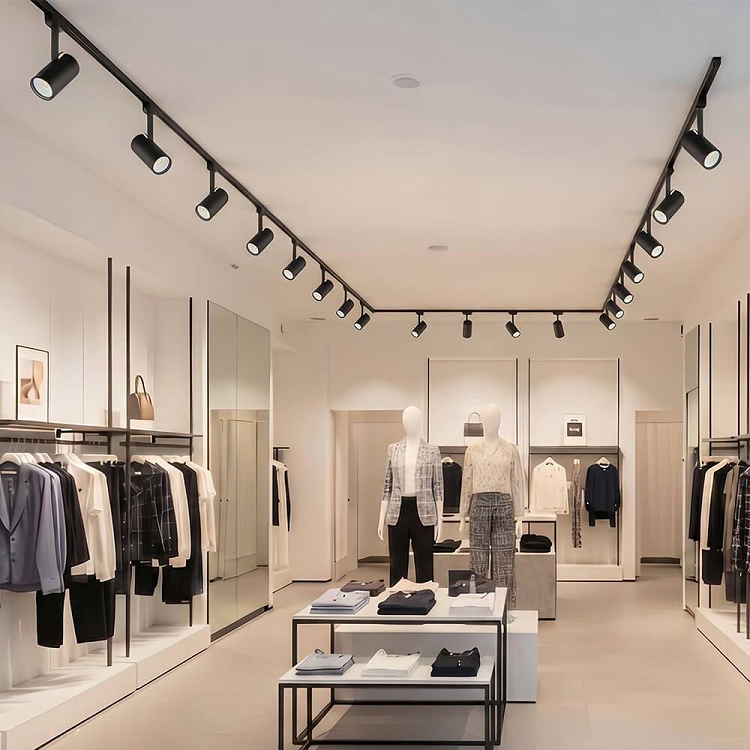
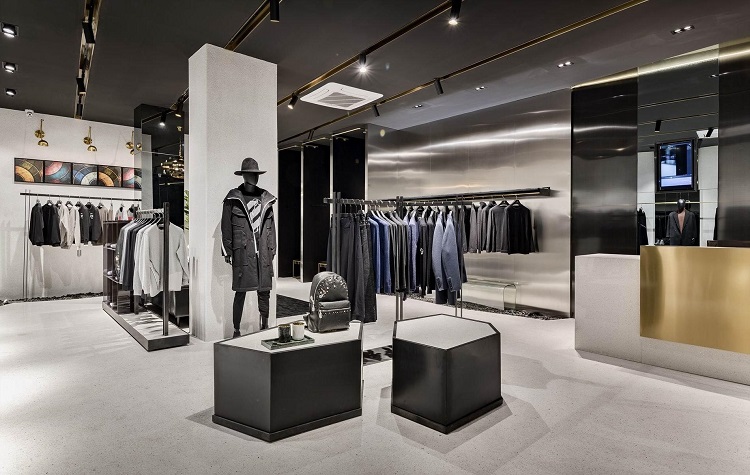
For example, office buildings typically need comfortable, uniform illumination that supports productivity and reduces visual discomfort. Retail stores often require directional lighting to highlight products, while hotels and restaurants may prioritize ambience, appearance, and flexible lighting control.
Common applications for COMMERCIAL LED DOWNLIGHTS include:
- Offices and corporate buildings: Comfortable illumination, controlled glare, and consistent color appearance.
- Hotels and hospitality spaces: Attractive lighting effects, dimming options, and coordination with interior design.
- Retail stores and showrooms: Appropriate beam angles and color rendering for merchandise displays.
- Restaurants and cafés: Flexible lighting levels and color temperatures that suit different environments.
- Residential developments: Reliable performance, installation convenience, and consistent product specifications.
- Commercial corridors and reception areas: Uniform illumination and practical maintenance requirements.
When discussing a project with a manufacturer, explain where the downlights will be installed, the ceiling construction, the required lighting effect, and any environmental conditions that may affect product selection.
Define Your Required Downlight Specifications
Once the application is clear, establish the technical requirements.
Important specifications include:
- Wattage: The electrical power consumed by the fixture.
- Lumen output: The total quantity of visible light produced.
- Color temperature (CCT): The appearance of the light, such as warm white, neutral white, or cool white.
- Color rendering index (CRI): An indication of how accurately colors appear under the light source.
- Beam angle: The distribution of light across the illuminated area.
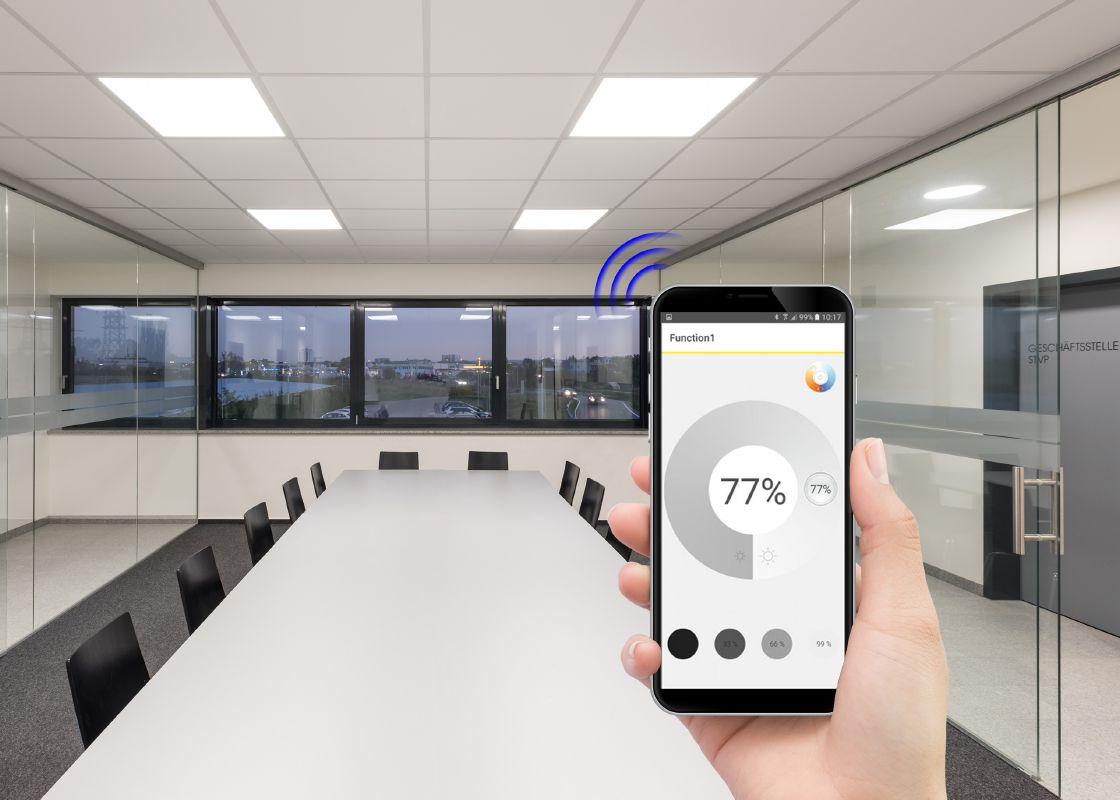
- Dimming compatibility: Whether the fixture supports the required dimming system.
- Ceiling cutout size: The opening required for recessed installation.
- Installation depth: The available space needed above the ceiling.
- IP rating: The degree of protection against dust and water, where relevant.
Do not assume that two fixtures with the same wattage provide the same lighting performance. Compare their actual lumen output, optical design, and relevant test data.
For example, a 12W LED DOWNLIGHT may be suitable for one application but unsuitable for another if its beam angle, glare characteristics, or light output does not meet the project requirements.
Prepare a Specification Sheet Before Requesting Quotations
A clear specification sheet helps suppliers quote on a comparable basis.
Include the required power, CCT, CRI, beam angle, dimensions, cutout size, dimming requirements, finish, certifications, packaging, estimated quantity, and delivery destination.
Providing these details at the beginning can reduce unnecessary communication and help the manufacturer recommend the most appropriate configuration.
2. Evaluate the Manufacturer's LED Downlight Product Range
A professional LED DOWNLIGHT MANUFACTURER should be able to explain its product options and help buyers identify suitable solutions for different applications.
A broader product range may also be useful for distributors and wholesalers looking to consolidate purchasing with one supplier.
Compare Different Types of LED Downlights
Depending on your project, you may need several downlight designs.
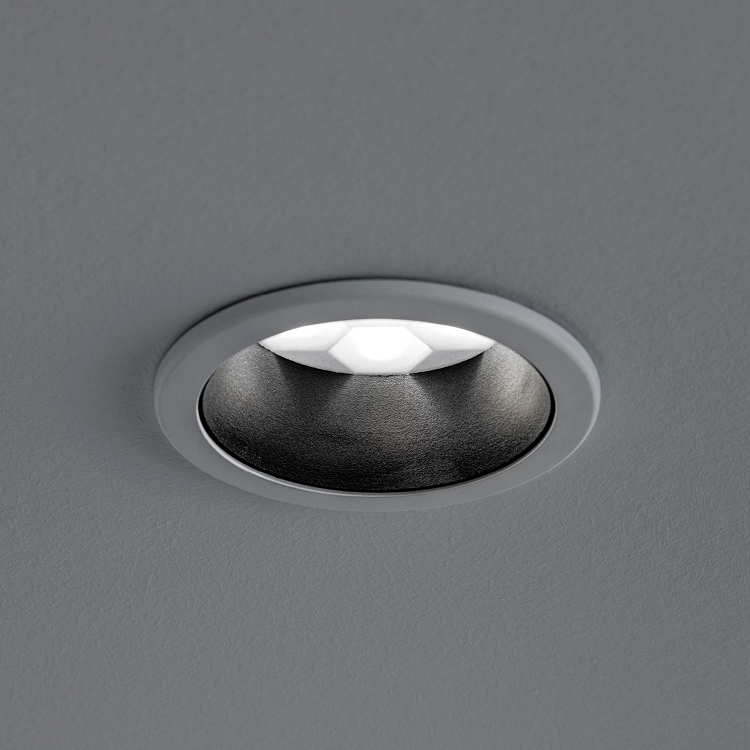
RECESSED LED DOWNLIGHTS are widely used in offices, hotels, residential developments, and commercial interiors. They offer a clean ceiling appearance and are available in different sizes and power ratings.
ANTI-GLARE LED DOWNLIGHTS are designed to improve visual comfort by controlling the visibility of the light source. They can be useful in offices, hospitality spaces, and other environments where glare management matters.
TRIMLESS LED DOWNLIGHTS create a minimalist appearance by integrating the fixture more closely with the surrounding ceiling finish. They require careful coordination between the lighting specification and installation details.
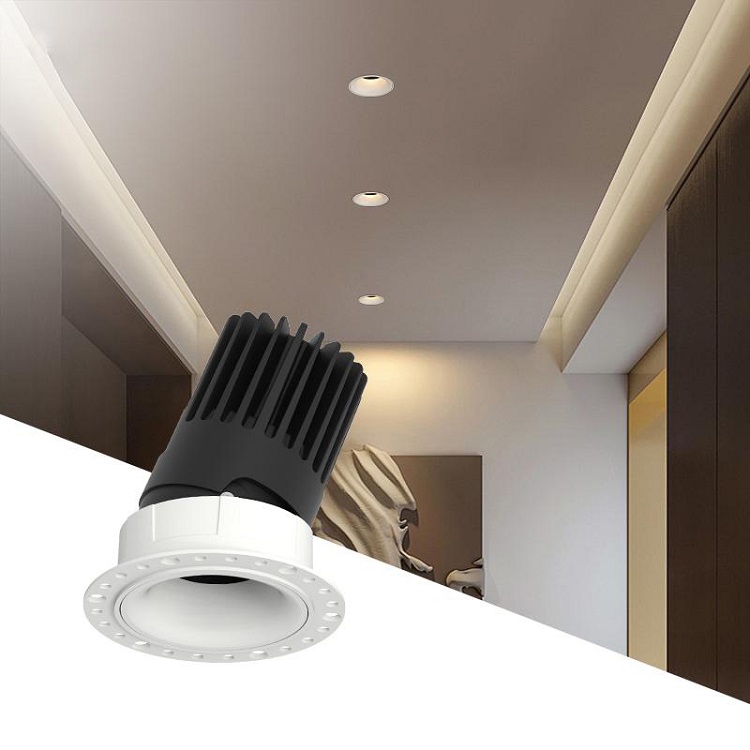
Adjustable recessed spotlights allow the light direction to be changed, making them suitable for accent lighting and highlighting specific objects or architectural features.
Round and square designs, different finishes, and single-head or multi-head configurations may also be available depending on the manufacturer's range.
The best choice depends on the lighting objective, ceiling construction, aesthetic requirements, and installation conditions.
Evaluate Performance Beyond Wattage
Product appearance and wattage are not enough to determine whether a downlight is suitable for a commercial project.
Consider the following performance factors.
Luminous efficacy and lumen output
Luminous efficacy describes how efficiently a fixture converts electrical power into light, usually expressed in lumens per watt. Compare this figure alongside total lumen output and the intended application.
Optical design and beam distribution
The beam angle affects how light spreads across a space. Narrower distributions may be appropriate for accent lighting, while wider distributions may be better suited to general illumination. Actual results also depend on mounting height, spacing, and the surrounding surfaces.
Thermal management
LED components generate heat during operation. A suitable thermal design helps manage operating temperatures and supports consistent performance over the product's intended service life.
Driver quality and dimming stability
The driver converts incoming electrical power into the form required by the LED system. Buyers should consider flicker performance, electrical compatibility, dimming requirements, and the driver's relevant safety and performance documentation.
Color consistency
For projects containing multiple fixtures, consistent color appearance is important. Ask the manufacturer about its LED binning practices and the controls used to maintain consistency between production batches.
Request Samples and Technical Documentation
Before placing a large order, request representative samples where practical.
Review the finish, construction, installation method, light distribution, and overall product quality. If the project has specific performance requirements, ask for relevant datasheets, photometric reports, installation instructions, and test documentation.
For larger projects, sample approval should be documented so that the approved product configuration can be used as a reference during bulk production.
3. Verify the LED Downlight Manufacturer's Factory Capabilities
Choosing a manufacturer rather than simply comparing product listings can help B2B buyers establish a more reliable supply relationship.
However, the term "manufacturer" alone does not guarantee that a supplier controls every stage of production. Buyers should verify the supplier's actual capabilities.
Manufacturer vs. Trading Company: What Should Buyers Check?
A trading company can offer valuable sourcing services, but a direct manufacturing relationship may provide additional advantages when technical customization, production coordination, and repeat orders are important.
When evaluating a potential LED DOWNLIGHT MANUFACTURER, ask:
- Does the company operate its own production facilities?
- Can it explain its assembly and quality control processes?
- Does it have experience producing the specific product category you need?
- Can it manage product customization and technical changes?
- Is it able to maintain consistent specifications across repeat orders?
- Can it provide relevant technical documents and quality records?
Factory photographs, production videos, product samples, and live factory visits can help you assess the supplier's capabilities.
The objective is not simply to confirm that a factory exists. It is to understand whether the manufacturer can consistently deliver products that meet your requirements.
Evaluate Production Capacity and Quality Control
Production capacity matters when you need to fulfill large orders or maintain stock for distribution.
However, a large production facility does not automatically guarantee product quality. Ask how the manufacturer manages incoming materials, production processes, finished-product inspection, and order traceability.
A well-organized quality control process may include:
- Incoming inspection of relevant components.
- Verification of assembly procedures.
- Electrical and functional testing appropriate to the product.
- Inspection of appearance, dimensions, and labeling.
- Final checks before packaging and shipment.
- Records that help identify and investigate quality issues.
For repeat business, consistent production specifications are especially important. Changes to components, drivers, or product construction should be communicated and approved when they affect the agreed requirements.
Check OEM and ODM Customization Capabilities
OEM and ODM services can be important for lighting brands, distributors, and project buyers with specific product requirements.
Depending on the manufacturer's capabilities, customization may include:
- Power ratings and lumen output.
- Color temperature and color rendering options.
- Beam angles and optical configurations.
- Housing design, dimensions, and finishes.
- Driver and dimming configurations.
- Branding, labeling, and packaging.
- Product specifications tailored to particular applications.
Before starting a customized project, confirm the development process, minimum order quantity, sample approval requirements, tooling costs where applicable, and production lead time.
Clear communication at this stage helps prevent unexpected costs and delays later.
4. Check Certifications, Product Safety, and Quality Standards
Product compliance is an essential consideration when purchasing LED DOWNLIGHTS for international markets.
The relevant requirements depend on the destination country, product design, electrical configuration, installation environment, and applicable regulations.
Confirm the Requirements in Your Target Market
For example, products sold in European markets may need to comply with applicable CE-related requirements and relevant EU legislation. RoHS requirements may also apply to the product and its components.
For the UK, buyers should confirm the conformity requirements applicable to their product and market route. For North America, UL or ETL certification or listing may be relevant, depending on the product, application, and project specifications.
These examples are not a complete list of requirements, and one certificate should not be assumed to cover every market or product configuration.
Before placing an order, identify the applicable requirements with your compliance team, importer, project consultant, or other qualified professional.
Verify Certificates and Test Reports
Do not rely solely on a supplier's claim that a product is certified.
Ask for the relevant documentation and check:
- The certificate holder and manufacturer details.
- The product model or product family covered.
- The scope of the certification or assessment.
- The applicable standards and test information.
- The validity status, where relevant.
- Whether the supplied configuration matches the documented product.
A certificate covering one model does not necessarily cover every product in the manufacturer's catalogue.
If your project requires specific documentation, confirm its availability before approving the purchase order.
Evaluate the Manufacturer's Quality Assurance Process
Certifications are important, but they should not replace ongoing quality control.
Ask the supplier how it verifies product consistency, manages defective components, records test results, and handles nonconforming products.
For large commercial orders, agree on the required inspection criteria before production. Depending on the project, this may include dimensional checks, appearance standards, electrical tests, packaging requirements, and pre-shipment inspections.
A clearly documented process gives both parties a better basis for resolving quality issues.
5. Compare Price, Warranty, and Long-Term Value
Price is an important factor in B2B purchasing, but the lowest quotation is not always the most economical choice.
A meaningful comparison should consider the complete product specification, expected performance, warranty terms, logistics, and ongoing support.
Why the Lowest LED Downlight Price Is Not Always the Best Choice
Two quotations may appear similar while including different components, technical performance, or service commitments.
Differences may involve LED components, drivers, optical systems, housing materials, thermal design, packaging, or the scope of product testing.
A lower initial price may also be offset by additional costs if the product fails to meet project requirements, requires frequent replacement, or creates installation problems.
When comparing quotations, make sure the suppliers are offering equivalent specifications. If one quotation excludes a required driver, dimming function, or certification, the price comparison will not be meaningful.
Compare Warranty Terms and After-Sales Support
Warranty coverage is another important consideration when selecting an LED DOWNLIGHT MANUFACTURER.
Ask for written warranty terms that explain the coverage period, exclusions, claim process, and available remedies.
You should also confirm how the supplier handles defective products, replacement parts, technical questions, and issues identified after installation.
For distributors, a clear warranty process helps simplify communication with end customers. For contractors and project owners, it can reduce uncertainty when managing product defects or maintenance requirements.
Avoid relying on a warranty period alone. The manufacturer's ability to respond to claims and provide appropriate support also matters.
Consider the Total Cost of Ownership
The total cost of ownership includes more than the purchase price.
It may involve energy consumption, installation labor, maintenance, replacement costs, and the operational consequences of lighting failures.
For example, a fixture that requires additional installation work may increase project costs even if its unit price is lower.
When comparing products, consider the intended operating hours, available maintenance access, replacement procedures, and substantiated service-life information.
This approach helps buyers select products that make financial sense over the expected project lifecycle.
6. Evaluate Communication, Lead Time, and Bulk Order Reliability
A reliable manufacturing partner should be able to coordinate technical details, production schedules, and delivery requirements throughout the purchasing process.
This is particularly important when a lighting order is linked to a construction schedule or a distributor's inventory plan.
Check the Manufacturer's Communication and Technical Support
Pay attention to how the supplier responds to your initial enquiry.
Does the team understand your application? Are technical answers specific and clear? Can the supplier explain the differences between product options and identify missing information in your specification?
A professional quotation should clearly identify the product model, specifications, quantity, price, packaging terms, and other agreed conditions.
Effective communication before an order is placed can help reduce misunderstandings during production.
Confirm Production Lead Time and Delivery Arrangements
Before confirming a purchase order, discuss:
- Sample availability and approval timelines.
- Expected bulk production lead time.
- Minimum order quantities.
- Packaging and labeling requirements.
- Shipping arrangements and delivery responsibilities.
- Inspection requirements before shipment.
- Procedures for communicating production changes.
Lead times can vary depending on order quantity, component availability, customization, and seasonal demand. Ask for a schedule based on your actual order rather than relying on a general estimate.
For time-sensitive projects, confirm which milestones require approval and who is responsible for each step.
Assess Support for Repeat Orders
For wholesalers and distributors, a successful first order is only part of the relationship.
The manufacturer should be able to reference the approved product configuration and communicate any changes that could affect performance or appearance.
This is especially important for projects completed in stages, where additional fixtures may be required months after the original delivery.
Consistent specifications, documented approvals, and clear communication can make repeat purchasing more predictable.
7. Questions to Ask Before Choosing an LED Downlight Manufacturer
Before selecting a supplier, use the following questions to assess whether it can meet your commercial requirements.
What Is Your Minimum Order Quantity and Production Lead Time?
Confirm the MOQ for standard and customized products, sample availability, production schedules, and any quantity-related pricing differences.
If you are a distributor, ask whether the supplier can support repeat orders and different product configurations.
Can You Provide Samples, Datasheets, and Relevant Certificates?
Ask for documentation that matches the exact model and configuration under consideration.
Where necessary, arrange sample approval before placing a bulk order.
Do You Support OEM and ODM Projects?
Clarify the available customization options, branding requirements, development process, and any additional costs.
If the product is intended for a specific market, communicate the relevant technical and compliance requirements at the beginning.
What Quality Control and Warranty Policies Do You Offer?
Request a clear explanation of inspection procedures, quality records, warranty coverage, and the process for reporting product issues.
The answers should be specific enough to help you evaluate the supplier against your project requirements.
8. Why Work with Fitlight for Commercial LED Lighting Projects?
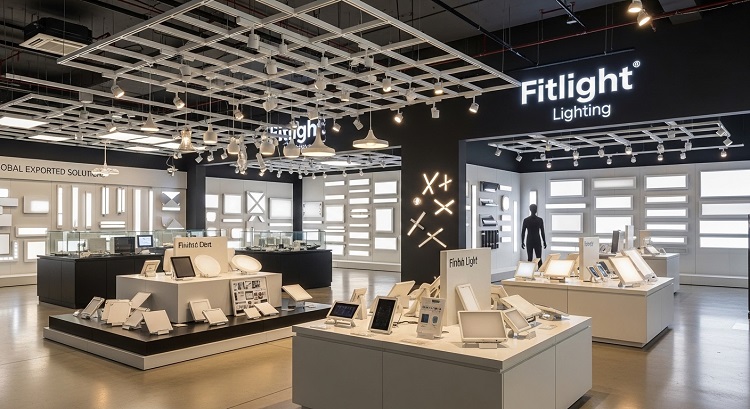
At FITLIGHT LIGHTING, we focus on indoor LED lighting products for commercial applications, supporting buyers who need product options for different lighting requirements.
As a lighting manufacturer with more than 14 years of manufacturing experience, we understand the importance of product consistency, practical technical communication, and dependable coordination throughout the purchasing process.
Multiple Indoor Lighting Categories for Different Applications
Our product range includes:
- LED DOWNLIGHTS for general and architectural lighting.
- LED spotlights for directional and accent lighting.
- LED track lights for flexible commercial lighting layouts.
- Magnetic track lighting systems for adaptable lighting designs.
- LED linear lights for offices, retail spaces, and other commercial interiors.
Having access to multiple product categories can help distributors, wholesalers, and project buyers explore coordinated lighting solutions through one supplier.
The appropriate product selection will depend on the application, technical specifications, installation requirements, and target market.
Customization for Commercial Lighting Requirements
Commercial projects do not always fit standard product configurations.
Depending on the product and manufacturing requirements, customization may involve power ratings, color temperature, product appearance, driver configurations, branding, and packaging.
To help us evaluate your requirements, share your application, preferred specifications, estimated order quantity, and destination market. This information allows our team to understand your needs and identify suitable options for further discussion.
Product Documentation and Project Communication
Technical documentation and clear communication are important parts of the procurement process.
When evaluating a product, buyers should confirm the available specifications, relevant compliance documents, sample requirements, production arrangements, and warranty terms before placing an order.
Our goal is to help B2B customers identify suitable indoor lighting products and communicate their requirements clearly throughout the sourcing process.
To learn more about our products, visit the FITLIGHT LIGHTING official website and explore the available lighting categories.
Conclusion: Choose an LED Downlight Manufacturer That Fits Your Project
Selecting the right LED DOWNLIGHT MANUFACTURER requires more than comparing product photographs and unit prices.
Start by defining your project requirements. Then evaluate product performance, factory capabilities, customization options, compliance documentation, quality control, warranty coverage, and delivery reliability.
For distributors and wholesalers, consistent specifications and dependable repeat orders are particularly important. For contractors and project buyers, technical suitability, installation requirements, and project coordination may be equally critical.
Taking the time to evaluate these factors before purchasing can help reduce avoidable risks and build a stronger long-term supply relationship.
Looking for a Reliable LED Downlight Manufacturer for Your Next Project?
FITLIGHT LIGHTING supplies indoor lighting products, including LED DOWNLIGHTS, spotlights, track lights, magnetic track lighting systems, and linear lights.
Contact our team to discuss your project requirements, explore suitable product options, and request a quotation.
To help us respond more effectively, please include your target application, required specifications, estimated order quantity, and destination market.
We look forward to learning more about your commercial lighting project and exploring how FITLIGHT LIGHTING can support your sourcing needs.